Cost depends on your supplier’s price per cubic yard, the volume calculated here, and whether you buy bulk or bagged material.

Play Area Bark Calculator
Order
—
Play area
—
Required depth
—
Base volume
—
Bags needed (2 cu ft bags)
—
Depth guidance reflects commonly cited US CPSC Public Playground Safety Handbook figures for loose-fill wood mulch/engineered wood fiber. Always confirm required depth against the equipment manufacturer's fall height rating and local code before ordering.
Play Area Bark Calculator: Get the Right Depth and Volume for Safe Outdoor Play
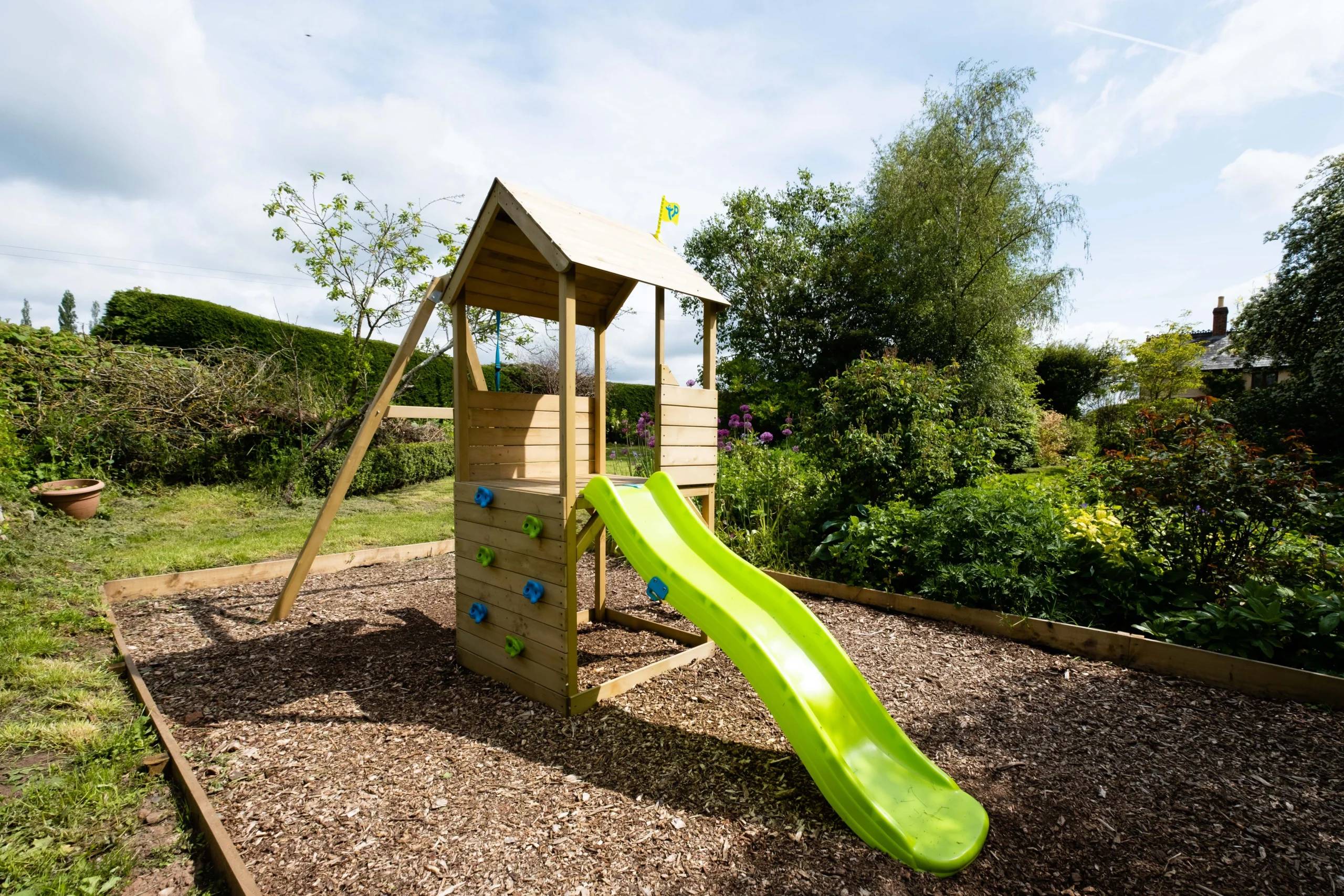
Planning a backyard swing set or a school play zone starts with one question: how much loose fill do you actually need under the equipment? This playground bark calculator answers that in seconds. Enter your play area’s length, width, and the maximum fall height of your equipment, and this playground bark calculator returns the depth you need, the volume to order, and how many bags to buy, all based on commonly cited US CPSC fall-height guidance.
Unlike a generic garden mulch tool, this playground bark calculator is built around fall-height safety depth, not general coverage. Playground surfacing has its own rules: the deeper the potential fall, the deeper the fill needs to be, and getting that number wrong is a safety issue, not just a budget one.
What Is a Play Area Bark Calculator
A play area bark calculator is a purpose-built tool for figuring out how much loose-fill wood mulch, bark chips, or engineered wood fiber a playground, swing set, or climbing structure needs underneath it. Instead of asking you to guess a depth, this playground bark calculator ties the required depth to the fall height of the equipment, since that is exactly how US playground safety guidance frames it.
Homeowners use it for backyard swing sets. Schools, daycares, and park departments use it for larger play zones where inspectors check depth compliance. Either way, the goal of a playground bark calculator is the same: turn a length, a width, and a fall height into a real order quantity
How the Play Area Bark Calculator Works
The math behind this playground bark calculator is straightforward once you break it into steps.
First, it multiplies length by width to get square footage. Second, it converts your selected fall-height depth from inches to feet. Third, it multiplies area by depth to get cubic feet, then divides by 27 to get cubic yards, since bark is sold and delivered by the yard. Finally, it adds a compaction buffer, because loose fill settles with rain, foot traffic, and time, so ordering the bare minimum leaves you short within a season.
Length (ft) x Width (ft) = Area (sq ft)Area (sq ft) x Depth (ft) = Volume (cu ft)
Volume (cu ft) / 27 = Volume (cu yd)
Volume (cu yd) x (1 + buffer %) = Order quantityHow to Use the Playground Bark Calculator
Using this playground bark calculator takes four inputs.
- Measure and enter the length of the play area in feet, including the required use zone around the equipment, not just the footprint of the structure itself.
- Measure and enter the width the same way.
- Select the maximum fall height of the tallest platform or swing seat on the equipment. This determines the required depth under most US guidance.
- Adjust the compaction buffer if you want extra material on hand. Twenty percent is a reasonable starting point for most residential and commercial installs.
Click calculate, and the results update instantly.
Understanding Your Results
Each figure this playground bark calculator returns maps to a specific decision you need to make before ordering.
Play area: This is your total square footage, length multiplied by width. Double-check this matches your tape measurements, since every other number is derived from it.
Required depth: This is the minimum uncompressed depth in inches recommended for your selected fall height. It is not a suggestion; it is the number an inspector or safety audit will check.
Base volume: This is the raw cubic yardage needed to fill your play area to the required depth, with no extra buffer. It is useful for comparing supplier pricing per yard.
Order quantity: This is the number you actually take to a supplier. It includes your compaction buffer, so you are not caught short six months in when the material has settled.
Bags needed: This converts the base volume into standard two-cubic-foot bags, which is handy for smaller residential jobs where bulk delivery does not make sense.
US Playground Fall-Height Depth Standards
The depth guidance in this playground bark calculator reflects figures commonly cited from the US Consumer Product Safety Commission’s Public Playground Safety Handbook for loose-fill wood mulch and engineered wood fiber.
| Maximum fall height | Required uncompressed depth |
|---|---|
| Up to 5 feet | 6 inches |
| Up to 7 feet | 9 inches |
| Up to 10 feet | 12 inches |
These figures are a starting point, not a substitute for checking your equipment manufacturer’s rated fall height or your local building and park code. Loose-fill wood products also need periodic top-ups, since raking, weather, and traffic reduce depth over time.
Worked Example: Backyard Play Area
Say you’re covering a 20 ft by 15 ft play area under a swing set with a maximum fall height of 6 feet.
- Area = 20 × 15 = 300 sq ft
- Required depth (up to 7 ft fall height) = 9 inches = 0.75 ft
- Base volume = 300 × 0.75 = 225 cubic feet = 8.3 cubic yards
- With a 20% compaction buffer = about 10 cubic yards to order
- Bags needed = 225 ÷ 2 = about 113 bags at 2 cu ft each
At this size, bulk delivery is almost always cheaper and more practical than buying bags.
Playground Bark, Wood Chips, and Rubber Mulch
Loose-fill wood bark and engineered wood fiber are the most common playground surfacing because they are affordable and easy to install, but they are not the only option. Rubber mulch, poured-in-place rubber, and rubber tiles offer a longer service life and less ongoing top-up at a higher upfront cost. If you are comparing rubber mulch coverage for a play area instead of wood bark, the same area and depth logic applies, though rubber products typically use a shallower required depth for the same fall-height rating, so always check the manufacturer’s certified fall-height rating before ordering.
If your project also needs general landscaping materials beyond the play zone, our trusted mulch calculator for landscaping estimates covers everyday garden beds, walkways, and yard coverage projects.
Frequently Asked Questions
How much bark do I need for a playground?
It depends on your play area’s square footage and the required depth for your equipment’s fall height. Enter both into this playground bark calculator, and it will return the volume in cubic yards along with a bag count for smaller orders.
How deep should playground bark be?
Under commonly cited US guidance, 6 inches covers fall heights up to 5 feet, 9 inches covers up to 7 feet, and 12 inches covers up to 10 feet, measured uncompressed.
How many bags of bark mulch do I need for a playground?
Divide your base volume in cubic feet by two, since standard bags hold two cubic feet each. This playground bark calculator does that math automatically once you enter your dimensions.
How often should playground bark be replaced or topped up?
Loose-fill wood surfacing compresses and decomposes over time, so most play areas need a top-up every year or two, depending on climate and foot traffic.
Can I use regular garden mulch on a playground?
No. Playground surfacing needs to meet specific fall-height safety depths and should be free of contaminants like dyes, sharp debris, or treated wood, so use a mulch rated for playground or play area use.
Is rubber mulch better than wood bark for a play area?
Rubber mulch lasts longer and needs less frequent top-up, but it costs more upfront. Both still need to meet the required depth for your equipment’s fall height.
How much does playground bark cost to install?
A mulch calculator estimates the amount of mulch needed for landscaping projects quickly and accurately.

Quick Links
Get In Touch
Street 7171 W Irving Park Rd, Chicago, Illinois, 60634, United States
Email: info@mulchcalculatoronline.com
Disclaimer
The results provided by this mulch calculator are for estimation purposes only. Calculations are based on the measurements and depth you enter and are intended as a general guide to help you plan your project. Actual material needs may vary depending on settling, waste, irregular bed shapes, and the specific mulch product you purchase. We recommend adding 10–15% to your estimated total to account for variations. Always consult your local supplier for product-specific coverage rates before placing a final order. We are not responsible for over-purchasing, under-purchasing, or any costs incurred based on estimates generated by this tool.
© All Rights Reserved.