Compost Calculator
For a 4×8 ft raised bed (32 sq ft) filled to 8 inches with compost, you need 0.79 cubic yards or about 21 bags of 1 cu ft compost.
Compost Calculator — How Much Compost Do I Need?
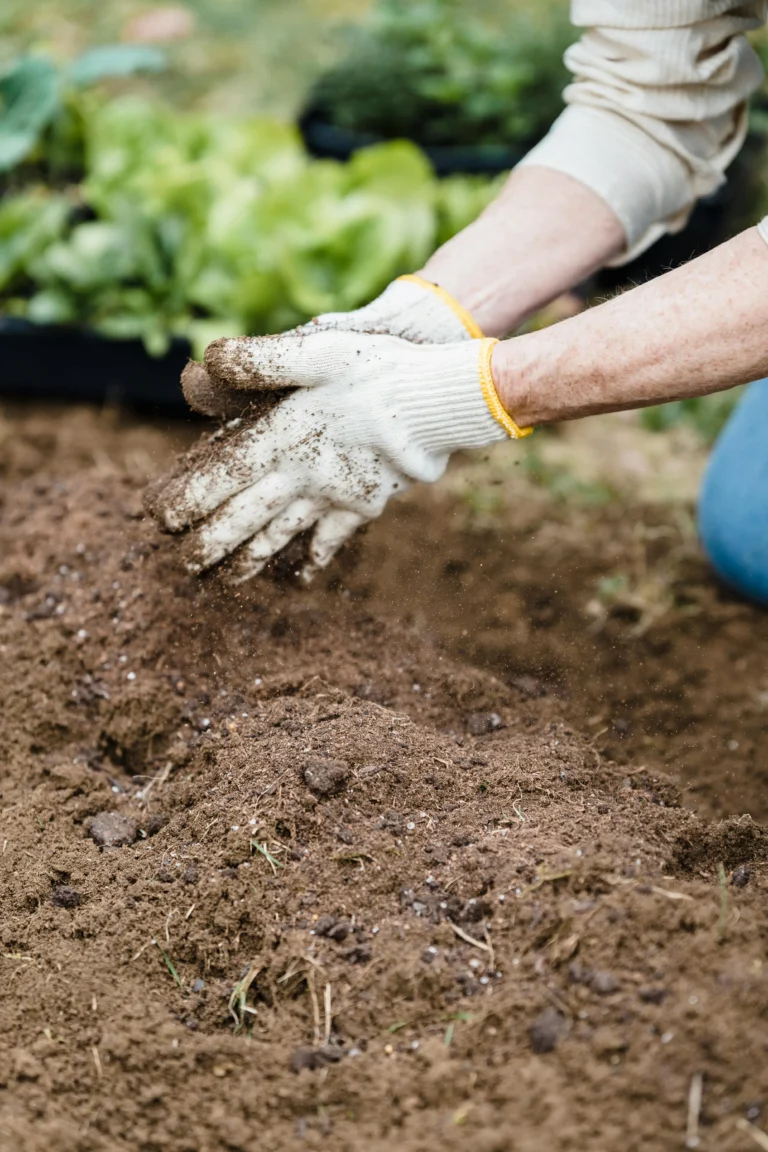
Compost is a nutrient-rich soil amendment used to improve soil structure, feed plants, and boost microbial activity. Unlike mulch or topsoil, compost is applied in thinner layers and is often mixed into existing soil rather than just laid on top. Use the calculator above to get your exact cubic yards or bags, then check the guides below for application rates by project type.
This guide explains how to use the calculator, what every result means, and how to apply compost correctly for any project. Our free online compost calculator takes all the guesswork out of the process. Just enter your bed dimensions and desired depth, and you instantly get results in liters, cubic yards, or bags—plus a full cost comparison between bags and bulk delivery. Visit our free mulch calculator for your yard to explore more free gardening tools.
What Is a Compost Calculator?
A compost calculator is a free online tool that estimates how much compost you need for a given garden area based on your bed dimensions, the depth of compost you want to apply, and the type of compost you are using. Instead of guessing how many bags to buy or eyeballing a pile in a wheelbarrow, you enter a few details and the calculator instantly gives you volume in liters, estimated weight in kilograms, bag counts for both 25L and 40L bags, bulk cubic meter requirements, and a full cost comparison between purchasing options.
Our online compost calculator is designed for home gardeners, landscapers, and anyone asking “how much compost do I need?” before a planting season. It works for rectangular beds, square plots, circular raised beds, triangular beds, and large lawn areas alike.
Compost Calculator for Raised Beds, Pots, and Containers
Raised beds, pots, and containers all use compost differently than a typical in-ground garden bed — the right amount depends heavily on the size and purpose of the space you’re filling.
Raised Beds
Raised beds typically use a 25–50% compost-to-soil blend rather than straight compost. For a brand-new bed, mix one part compost with two parts screened topsoil—this gives roots the drainage and nutrient balance they need without the bed becoming too dense or waterlogged. A typical 4 ft × 8 ft raised bed filled 12 inches deep needs about 1.3 cubic yards of total fill, with roughly 0.6 cubic yards of that being compost if you’re using a 50% blend.
For an established raised bed that just needs refreshing, you don’t need to remix the whole thing—a 1 to 2 inch top layer applied once or twice a year is enough to replenish nutrients lost to the previous growing season. Select “New Bed” as your application purpose in the calculator above for a fresh build or “Top Dressing” for an annual refresh, and adjust the soil amendment slider to set your exact blend ratio.
Pots and Containers
Pots and containers are a different calculation entirely. Because the volumes involved are small, compost for containers is measured in quarts or liters, not cubic yards—ordering “0.02 cubic yards” from a bulk supplier makes no sense when you can just buy a couple of bags.
Unlike a raised bed, most container plantings use a much higher proportion of compost — often blended with potting soil or perlite for drainage rather than mixed with garden soil. Select “Container / Pot” as your bed shape in the calculator above, enter your pot’s diameter and fill depth in inches, and the results will switch automatically to quarts and liters. As a reference point, a standard 12-inch pot filled 10 inches deep needs about 19.5 quarts (18.5 liters) of potting compost.
If you’re filling several pots of different sizes for a patio or balcony garden, calculate each pot separately and add the totals together—pot volume scales with the square of the radius, so a 16-inch pot needs roughly double the compost of a 12-inch pot at the same depth, not just a third more.
How to Use the Compost Calculator
Using the compost calculator for garden planning takes less than a minute. Work through these five steps:
Step 1—Enter Your Garden Bed Dimensions
Type in the length, width, and depth of the compost layer you want to apply. The calculator supports three bed shapes:
- Rectangular or square beds — the most common type; uses length × width for area
- Circular raised beds—enter the diameter as the length; width is ignored and the correct π formula is used automatically
- Triangular beds—uses half of length × width for an accurate triangular area
Step 2—Choose Compost Type and Quality
Select the type of compost you plan to use. Each type has a different density and breakdown rate, which affects both volume and weight calculations. You also set the maturity level — fully matured, partially matured, or fresh/raw — and adjust the organic matter percentage using the slider. The seven available types are General Garden Compost, Mushroom Compost, Homemade Compost, Worm Castings, Leaf Mould, Commercial Potting Mix, and Manure Compost.
Step 3—Set the Application Purpose
Tell the compost calculator what you are trying to achieve. The four options are:
- Top Dressing — a light surface application to feed existing plants; no digging required, best done in spring or autumn
- Soil Mix — blending compost into existing soil before planting
- New Bed — building a brand new garden bed from scratch
- Mulching—laying compost as a moisture-retaining surface layer around plants
Each purpose adjusts the recommendation, seasonal advice, and pro tip shown in your results.
Step 4—Add Pricing for Cost Estimates (Optional)
Enter the price per 25 L bag, per 40 L bag, and the bulk delivery price per cubic meter. The compost calculator will work out the total cost for each option and highlight the best value choice for your specific project size.
Step 5—Set Your Custom Mix Ratio (Advanced)
For gardeners making their own compost or wanting a custom blend, you can select a browns-to-greens carbon-to-nitrogen ratio (25:1 standard, 30:1 drier, or 20:1 wetter); set a soil amendment percentage; and describe your existing soil quality. This unlocks a full ingredient breakdown in the results.
Always add 10% to your calculated total to account for uneven ground, settling, and slight measurement inaccuracies. The compost calculator includes a built-in waste factor for this purpose.
What the Results Mean
Once you click “Calculate,” the compost calculator shows a complete results panel. Here is exactly what each section means:
Summary Stats
- Bed Area (m²)—the surface area of your garden bed calculated from your dimensions and shape. This is the base number everything else is built on.
- Volume Needed (liters) — the total volume of compost required to fill your bed to the specified depth. This is the number to use when ordering bulk compost or counting bags at the garden center.
- Estimated Weight (kg)—the approximate weight of the compost you need. This helps with planning delivery and handling—a cubic meter of dense compost like worm castings can weigh over 500 kg.
- Organic Matter (kg) — the weight of actual organic content in your compost based on the percentage you set. Higher organic matter content means richer, more nutrient-dense compost that does more for soil biology.
Volume Progress Bar
The green progress bar shows how close your chosen depth is to the recommended maximum of 30 cm for a standard garden bed. If you go beyond this, the tool displays a warning — very thick compost layers can cause waterlogging and compaction in confined beds. Split heavy applications into two seasonal rounds instead.
Bags Needed
- 25-litre bags — standard small bags available at most hardware and garden stores
- 40-litre bags — larger bags that offer slightly better value per litre at most retailers
- Bulk (m³) — the cubic meters needed if ordering a loose bulk delivery
Cost Estimate
If you entered prices, this section shows the total cost for each purchasing method and highlights the cheapest option. Bulk delivery almost always wins for beds larger than about 4 m², but for small beds, a few bags are more practical once delivery fees are factored in.
Custom Mix Breakdown
This section shows how many kilograms of each ingredient you need to make compost from scratch:
- Browns — carbon-rich dry materials like straw, cardboard, dry leaves, and wood chips. Browns provide structure and prevent the pile from becoming too wet.
- Greens — nitrogen-rich fresh materials like kitchen vegetable scraps, grass clippings, and coffee grounds. Greens fuel the microbial activity that drives decomposition.
- Soil Amendment — optional additions like perlite, horticultural grit, or coarse sand to improve drainage and aeration in heavier soils.
Application Schedule
- Recommended season — the best time of year to apply compost based on your chosen purpose
- Application frequency — how often to apply for ongoing soil health and nutrient cycling
- Next top-up—an approximate date to revisit and refresh the compost layer
- Maturation adjustment — explains how much extra volume was added to account for fresh or partially matured compost that will shrink as it finishes breaking down
How Much Compost Do I Need? Depth Guide by Project Type
The answer to “How much compost do I need?” depends entirely on what you are trying to achieve. Below are the standard compost incorporation depths recommended by soil biology experts:
Vegetable Gardens and Annual Flower Beds
Apply 2 to 4 inches (5 to 10 cm) of compost worked 6 to 8 inches into the existing soil. This is the most nutrient-intensive application and supports strong root zone health, active soil microorganisms, and vigorous plant nutrition throughout the growing season.
Lawn Topdressing
A thin layer of ¼ to ½ inch (0.6 to 1.3 cm) is enough for lawn care. This light application improves soil ecosystem activity without smothering grass. At ¼ to ½ inch deep, 1,000 sq ft of lawn needs about 0.8 to 1.5 cubic yards (21 to 42 cubic feet) of compost. The compost calculator handles this conversion automatically.
Raised Beds
For a new raised bed, a compost-to-soil ratio of 25 to 50% organic material is commonly recommended. A raised bed mix of one part compost to two parts topsoil creates excellent drainage and nutrient cycling capacity. For an existing raised bed that just needs refreshing, a 1- to 2-inch top layer applied once or twice a year is usually sufficient.
Trees, Shrubs, and Perennials
Work 1 to 2 inches of compost into the soil within the drip line of established plants to support root zone health and soil moisture management. Avoid placing raw compost directly against stems or trunks.
New Lawn Establishment
Incorporate 3 to 4 inches of decomposed organic matter into the top 6 inches of soil before seeding or laying sod. This sets up strong soil biology and reduces the long-term need for synthetic fertilisers.
Our online compost calculator is designed for home gardeners, landscapers, and anyone asking, “How much compost do I need?” before a planting season. It works for rectangular beds, square plots, circular raised beds, triangular beds, and large lawn areas alike.
Quick Reference: Compost Coverage Rate by Project
| Project Type | Recommended Depth | Notes |
|---|---|---|
| Vegetable garden | 2–4 inches / 5–10 cm | Till into top 6–8 inches of soil |
| Lawn topdressing | ¼–½ inch / 0.6–1.3 cm | Rake in lightly after application |
| New raised bed | 25–50% of total mix | Blend with topsoil for raised bed mix |
| Existing raised bed | 1–2 inches / 2.5–5 cm | Annual top-up in spring or autumn |
| Shrubs and trees | 1–2 inches / 2.5–5 cm | Keep away from stems |
| New lawn | 3–4 inches / 7.5–10 cm | Incorporate before seeding |
Use the compost calculator above to convert any of these depths into exact liters, cubic yards, or bag counts for your specific area.
Compost Needed Per Square Metre
| Depth | Compost per m² |
|---|---|
| 1 cm | 10 liters |
| 2.5 cm (1 in) | 25 liters |
| 5 cm (2 in) | 50 liters |
| 10 cm (4 in) | 100 liters |
| 15 cm (6 in) | 150 liters |
Depth Guide Table
| Project Type | Recommended Depth |
|---|---|
| Lawn top-dressing | 1/4″ – 1/2″ |
| Garden bed top dressing | 1″ – 2″ |
| New bed / soil amendment (mixed in) | 2″ – 3″ |
| Raised bed (mixed with topsoil) | 3″ – 4″ of compost blended into total mix |
| Vegetable garden (annual refresh) | 1″ – 2″ |
Tip: Compost breaks down and settles faster than topsoil — for raised beds, plan to top up once or twice a season.
How Many Bags Do I Need?
| Area | Depth | Cubic Yards | Bags (1 cu ft) |
|---|---|---|---|
| 50 sq ft | 1″ | 0.15 yd³ | ~4 bags |
| 100 sq ft | 2″ | 0.6 yd³ | ~16 bags |
| 200 sq ft | 2″ | 1.2 yd³ | ~33 bags |
| 300 sq ft | 2″ | 1.9 yd³ | ~50 bags |
For raised beds or large areas over 1-2 cubic yards, bulk delivery is usually more cost-effective than bags—use the calculator above for your exact numbers.
How Many Yards of Compost Do I Need?
A yard of compost covers different areas depending on the depth you apply. Here is a practical reference:
- 1-inch depth: covers approximately 324 square feet
- 2-inch depth: covers approximately 162 square feet
- 3-inch depth: covers approximately 108 square feet
- 4-inch depth: covers approximately 81 square feet
So if you are asking, “How many yards of compost do I need for a 1,000 square foot garden?” the answer depends on depth. At a 2-inch application rate, you would need roughly 6.2 cubic yards. At 3 inches, you would need about 9.3 cubic yards. Our online compost calculator handles this math instantly — no manual conversion needed.
How Much Does a Yard of Compost Weigh?
A yard of compost weight varies based on moisture content and the type of organic material involved. As a general guideline:
- Dry finished compost: approximately 400 to 600 pounds per cubic yard
- Moist compost: approximately 1,000 to 1,200 pounds per cubic yard
- Worm castings: over 1,100 lbs per cubic yard — the densest common type
- Leaf mould: approximately 400 to 500 lbs per cubic yard—the lightest common type
- Bagged compost (typical): approximately 40 lbs per cubic foot, roughly 1,080 lbs per cubic yard
Most bulk compost deliveries fall in the 800 to 1,100 pound range per cubic yard when moisture is moderate. Your supplier will typically quote by the cubic yard or by the ton—our compost calculator gives you both figures so you are prepared for either conversation.
How Much Compost Do I Need for My Garden?
“How much compost do I need for my garden?” is one of the most common questions we receive. Here are three worked examples showing how the compost calculator works in practice:
Example 1: 10 x 20 ft Vegetable Bed at 3-inch Depth
Area = 10 × 20 = 200 sq ft. At 3 inches depth, volume = 200 × (3/12) = 50 cubic feet = 1.85 cubic yards = approximately 1,416 litres. With a 10% waste factor, order approximately 2 cubic yards, or about 1,560 litres.
Example 2: Garden Compost for 1,000 Sq Feet of Lawn at ½-inch Depth
Area = 1,000 sq ft. At ½ inch depth, volume = 1,000 × (0.5/12) = 41.7 cubic feet = 1.54 cubic yards = approximately 1,180 litres. This is a typical compost application for annual lawn topdressing to improve soil microorganism activity without lifting the turf.
Example 3: 4 x 8 ft Raised Bed at 50% Compost Mix
Volume of bed = 4 × 8 × 1 ft deep = 32 cubic feet. At a 50% compost-to-soil ratio in your raised bed mix, you need 16 cubic feet (about 0.6 cubic yards or 453 litres) of compost to blend with 16 cubic feet of topsoil.
Weight & Density
One cubic yard of compost weighs approximately 900 to 1,100 lbs (roughly 0.45–0.55 tons)—notably lighter than topsoil because of its looser, organic structure. Moist or fresh compost can weigh more; well-aged, dry compost weighs less
How Much Compost Do I Add to Soil?
The standard compost-to-soil ratio for garden preparation is 20–30% by volume. For every 10 inches of improved soil depth, roughly 2–3 inches should be compost.
Higher ratios — up to 50% — work well for raised beds and containers. Lower ratios of 10–15% suit in-ground beds that already have decent organic matter.
When calculating how much compost to add, three variables matter most: [list follows]:
- Your existing soil quality—sandy or clay-heavy soils benefit from larger compost additions
- The target compost-to-soil ratio for the application type
- The volume of the root zone you are trying to improve—typically the top 6 to 12 inches
For most home gardeners, a simple rule of thumb is to apply 2 to 3 inches of compost and work it into the top 6 inches of soil before every new planting season. The compost calculator above makes it easy to translate that guideline into a precise liter or bag count for any size garden.
What the Different Compost Types Mean
Each compost type in the calculator has a different density, nutrient profile, and best use case:
- General Garden Compost — sits in the middle for density and nutrients. The most widely available and cost-effective option for most gardeners.
- Mushroom Compost—slightly alkaline, ideal for brassicas, but use carefully around acid-loving plants.
- Homemade Compost—variable quality depending on your browns-to-greens ratio and maturity level. Use the custom mix section to dial in your exact blend.
- Worm Castings — the densest and most nutrient-rich option. Excellent for vegetable gardens but also the most expensive.
- Leaf mold—the lightest and lowest in nutrients. Best used for improving soil structure and soil moisture management rather than feeding plants directly.
- Commercial Potting Mix—consistent quality, good for container gardens and raised bed mix projects.
- Manure Compost—high in nitrogen, excellent for heavy-feeding vegetables. Always use fully matured manure compost to avoid burning plant roots.
Why Compost Matters: Benefits for Soil Health
Compost is not just fertilizer. It is a complex blend of decomposed organic matter that supports the entire soil ecosystem.
Regular compost application delivers: [list]:
- Improved soil biology—compost feeds the billions of soil microorganisms that break down nutrients and make them available to plant roots
- Better soil moisture management—organic material increases the water-holding capacity of sandy soils and improves drainage in heavy clay soils
- Stronger nutrient cycling—decomposed organic matter releases a slow, steady stream of nitrogen, phosphorus, and potassium, reducing the need for synthetic fertilizers
- Healthier root zone—a well-amended soil structure allows roots to penetrate deeper, access more water, and anchor plants more securely
- Long-term garden preparation—annual compost incorporation builds soil organic content year over year, creating a self-sustaining garden environment
Frequently Asked Questions
How much compost does a garden bed need?
Most garden beds benefit from a 5–10 cm layer for a seasonal top dressing, or 15–20 cm when building a new bed or replacing tired soil.
As a rough guide, a 3 m × 2 m bed with a 10 cm layer needs around 600 liters of compost.
The exact amount depends on your bed’s shape, soil condition, and what you’re growing—which is why using a calculator is far more reliable than guessing.
Can I use the compost calculator for bags as well as bulk orders?
Yes. The compost calculator displays results in both cubic yards and liters for bulk delivery and individual bag counts for 25 L and 40 L bagged compost from a garden center. Enter your local prices and the tool automatically highlights the best value option for your project size
What does the maturity level setting do?
Immature or partially matured compost continues to break down after you apply it, meaning it will shrink in volume over coming weeks. If you are using fresh or partially composted material, the compost calculator automatically increases the volume you need to order to account for this shrinkage. Fully matured compost has finished breaking down and will hold its volume reliably.
What is the difference between compost and topsoil?
Topsoil is the upper layer of existing ground — a mix of mineral particles, sand, silt, and clay. Compost is decomposed organic matter added to topsoil to improve its structure, nutrient content, and biology. For best results, blend compost and topsoil together rather than using either alone, especially for raised bed mix projects.
What is the Browns to Greens ratio?
The brown-to-green ratio refers to the carbon-to-nitrogen balance in a DIY compost pile. Browns are dry, carbon-rich materials; greens are fresh, nitrogen-rich materials.
A 25:1 ratio by weight is the standard balance for most home composting—it breaks down efficiently without becoming smelly.
A higher ratio like 30:1 suits drier climates or an abundance of dry material. A 20:1 ratio works better in wetter conditions with lots of fresh material.
Should I use bags or bulk delivery?
For small garden beds under 3 to 4 m², bagged compost is usually more practical because most bulk suppliers have a minimum delivery order of 1 m³. For larger beds or multiple beds, bulk delivery is almost always cheaper per liter and reduces plastic waste. Enter your local prices into the cost estimator, and the compost calculator will tell you exactly which option saves the most money for your project. If you’re also planning to add mulch around your beds, you can use a free mulch calculator online to estimate that coverage at the same time.
How often should I add compost to my garden?
Most gardeners add compost once or twice a year — typically in spring before planting and again in autumn after harvest. Annual compost application maintains healthy soil microorganism populations, replenishes organic material lost to decomposition, and supports ongoing nutrient cycling throughout the season. Very productive vegetable beds harvested multiple times a year may benefit from a light top dressing between each crop.
Is there such a thing as too much compost?
Yes. While compost is beneficial, excessive application can push nitrogen levels too high for some plants, alter soil pH, and cause waterlogging in confined beds. As a rule, do not exceed a 50% compost-to-soil ratio for in-ground beds, and avoid single applications deeper than 30 cm. For raised beds and containers, a 30 to 50% blend is generally the sweet spot. When in doubt, run a soil test before heavy applications.
Is this calculator suitable for vegetable gardens?
Absolutely. Vegetables are heavy feeders and benefit from rich, well-composted soil. For a vegetable bed, select Soil Mix or New Bed as your purpose, choose a nutrient-dense compost type like worm castings or mushroom compost, and set the organic matter percentage to at least 50% for best results. The application schedule section will also give you seasonal timing advice tailored to food growing.
How accurate is the compost calculator?
The compost calculator is highly accurate for standard rectangular, circular, and triangular areas. For irregularly shaped gardens, break your space into smaller sections, calculate each one separately, and add the results together. The built-in waste factor ensures you order enough material to complete the job even with minor measurement inaccuracies.
How much compost do I need per square metre?
For a standard topdressing application of 2.5 cm (1 inch), you need roughly 10 liters of compost per square meter. At 5 cm (2 inches), that doubles to about 20 liters per square meter. For new beds at a 10–15 cm depth, plan for 100–150 liters per square meter. Switch the calculator above to metric units and enter your area in square meters for an exact figure.
Is there a compost top dressing / topdressing calculator?
Yes—select “Top Dressing” as your application purpose in the calculator above, then choose whether you’re treating a new lawn or an established one. The tool automatically sets the right depth (up to ½ inch for new lawns, ¼ inch for established turf) and gives you the exact volume and bag count for your lawn size.
How much compost should I add to soil?
The standard ratio is 20–30% compost by volume blended into existing soil, worked into the top 6–8 inches. For raised beds, that ratio can go up to 50%. Select “Soil Mix” as your application purpose in the calculator above to get the exact volume for your bed size at this ratio.
Is there a compost calculator for raised beds?
Yes—the calculator above handles raised beds directly. Enter your bed’s length, width, and the depth you’re filling; select “New Bed” or “Soil Mix” as your purpose; and adjust the Soil Amendment slider to set your compost-to-soil blend ratio. For a typical 4×8 ft raised bed filled 12 inches deep at a 50% compost blend, you’ll need about 0.6 cubic yards of compost.
How much compost do I need for my garden in general?
It depends entirely on what you’re doing—topdressing an existing bed, mixing compost into soil before planting, or building a brand-new bed from scratch each uses a different depth and ratio. Use the Application Purpose selector in the calculator above to choose your project type; it will automatically apply the right depth recommendation and walk you through the rest.
Item #s there a compost calculator for pots and containers?
Yes. Select “Container / Pot” as your bed shape, enter the pot’s diameter and fill depth in inches, and the calculator switches its output to quarts and liters—the units potting compost is actually sold in—instead of cubic yards. A standard 12-inch pot filled 10 inches deep needs about 19.5 quarts (18.5 liters) of compost.
Is there a manure calculator for gardens?
Yes. Select “Manure Compost” as your compost type, then choose whether your manure is well-aged (6+ months) or fresh/raw (under 3 months). Fresh manure needs a thinner application — the calculator automatically reduces the recommended depth and adds a warning, since fresh manure can burn plant roots and shouldn’t be used within 90–120 days of harvesting edible crops.
What's a good compost mix calculator formula?
Cubic Yards = (Length × Width in sq ft × Depth in inches) ÷ 324, the same formula used for any bulk landscaping material. For DIY compost mixes, the calculator above also lets you set a browns-to-greens carbon ratio (25:1 standard) to break down exactly how many pounds of dry and fresh material your pile needs.
How do I calculate how much area my compost will cover?
Use the “Area covered by compost I have” mode at the top of the calculator instead of the default “Compost needed” mode. Enter how much compost you already have and your intended depth, and the tool tells you exactly how many square feet that amount will cover. As a quick reference: 1 cubic yard spread at 2 inches deep covers about 162 square feet.
How much compost do I need per square foot?
At a standard 2-inch application, you need about 0.006 cubic yards of compost per square foot, or roughly 1 bag (1 cu ft) per 6 square feet.
Can I use compost instead of topsoil?
Not entirely — compost is too rich and light-structured to use alone as fill or a growing base. It’s best mixed with topsoil (typically 20-30% compost) rather than used as a full substitute.
How often should I add compost to my garden?
Most gardens benefit from a 1-2 inch compost top dressing once or twice a year, ideally in spring and fall, to replenish organic matter as it breaks down.
How much does a cubic yard of compost cover?
One cubic yard covers about 324 square feet at 1 inch deep, or 162 square feet at 2 inches deep.