Mulch Bag Calculator
Mulch Bag Calculator: How Many Bags of Mulch Do You Actually Need
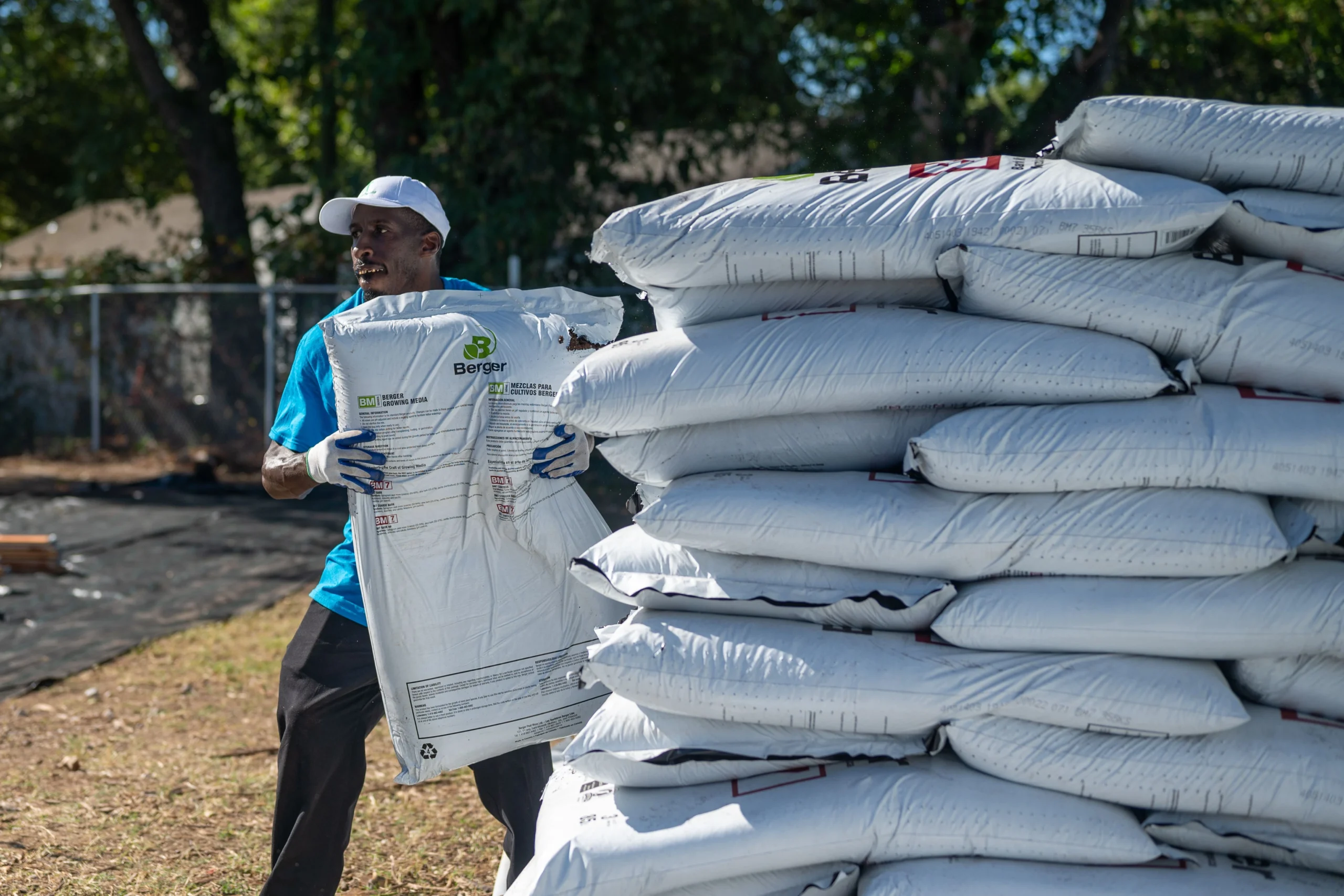
Buying mulch by the bag is easy until you get to the checkout line and realize you have no idea whether four bags or fourteen bags will cover your flower bed. A mulch bag calculator solves that guesswork in seconds, turning a simple measurement into an exact bag count based on US standard bag sizes.
What Is a Mulch Bag Calculator?
A mulch bag calculator is an online tool that converts the size of your garden bed, plus your desired mulch depth, into the exact number of bags you need to buy. Instead of estimating or over-ordering “just to be safe,” you enter your measurements once and get a straight answer: this many bags, not “somewhere around a dozen.”
This matters because bagged mulch in the US typically comes in a handful of standard sizes: 1.5 cubic feet, 2 cubic feet, and 3 cubic feet. Buying the wrong quantity means either driving back to the store mid-project or hauling home unused bags you didn’t need. People searching for a bag mulch calculator, a bagged mulch calculator, or simply asking, “How many bags of mulch do I need?” are all trying to avoid exactly that.
How the Mulch Bag Calculator Works
The calculation behind bag counts is the same volume math used by any mulch estimator, just converted into a specific product size at the end. Here’s the process step by step:
- Measure your bed. For a rectangular bed, measure length and width. For a circular bed, measure the diameter. For an irregular or unknown shape, estimate the total square footage directly.
- Calculate the area. Rectangular beds use length times width. Circular beds’ area use = π × radius². Either way, you end up with a square footage figure.
- Choose your depth. Most beds use 2 to 4 inches of mulch, with 3 inches being the most common recommendation for weed suppression without smothering roots.
- Multiply area by depth. Once depth is converted to feet, multiplying it by area gives you total cubic feet of mulch required.
- Divide by bag size. Since bags are sold in fixed sizes, usually 2 cubic feet in the US, dividing your total cubic footage by the bag size tells you exactly how many bags to buy.
- Round up. The calculator always rounds up to the nearest whole bag, since a partial bag isn’t something you can purchase at checkout, and most retailers don’t sell fractional bag quantities anyway.
This is the same underlying formula behind a mulch calculator for playground areas, a rubber mulch calculator, or a topsoil calculator, just applied specifically to bag counts instead of bulk cubic yards.
What the Results Actually Mean
After you calculate, you’ll see a few different numbers, and each one tells you something different:
- Bags needed: This is the headline number, rounded up to the nearest whole bag so you never come up short mid-project.
- Area (square feet): The flat footprint of your bed. Useful for comparing per-square-foot pricing between bagged and bulk mulch.
- Cubic feet: The raw volume required before it gets divided into bag sizes. This is the number bagged mulch pricing is built around.
- Cubic yards: Useful if you’re deciding between buying bags or having bulk mulch delivered instead, since bulk suppliers price by the cubic yard.
If you’re wondering how many bags of mulch for 100 square feet at a standard 3-inch depth, that works out to roughly 25 square feet per bag at 2 cubic feet each, meaning a 100 square foot bed needs around 13 bags. A 200-square-foot bed at the same depth needs close to 25 bags. These numbers shift depending on the depth you choose and the bag size available at your local store, which is exactly why running your own numbers through the calculator beats relying on a rule of thumb.
To make quick comparisons easier without opening the tool every time, here’s a rough reference for a 3-inch depth using standard 2-cubic-foot bags:
- 50 square feet: about 7 bags
- 100 square feet: about 13 bags
- 150 square feet: about 19 bags
- 200 square feet: about 25 bags
- 300 square feet: about 38 bags
These figures assume a flat, evenly graded bed. Sloped beds, raised borders, or beds with a lot of edging tend to use slightly more material than the flat math suggests, since mulch naturally settles toward the lowest point and thins out along raised edges. Adding a small buffer, usually 10 percent, accounts for this without leaving you short partway through spreading.
How Many Bags of Mulch Are on a Pallet?
A standard pallet of bagged mulch holds 60 to 80 bags, and the exact count comes down to bag size:
- 2 cubic foot bags: around 70 bags per pallet (the most common configuration at Home Depot, Lowe’s, and similar retailers)
- 1.5 cubic foot bags: around 80 bags per pallet
- 3 cubic foot bags: around 45 to 50 bags per pallet
- Rubber mulch: fewer bags per pallet, often 25 to 50, since rubber is heavier per cubic foot than wood
Suppliers build pallets to a safe stacking height rather than a strict weight cap, which is why the bag count stays fairly consistent across brands even though bag weight varies. At 70 bags of 2 cubic foot mulch, a full pallet holds about 140 cubic feet, or roughly 5.2 cubic yards—enough to cover around 560 square feet at a 3-inch depth. That makes a full pallet a practical choice once a project crosses the 15-to-20-bag mark, since bulk pallet pricing is usually cheaper per bag than buying individually.
How Many Bags of Mulch Fit in a Truck Bed?
This depends on truck size, but here’s a working range:
- Standard full-size pickup bed (about 8 ft long): roughly 20 to 30 bags of 2 cubic foot mulch, or about 2 to 3 cubic yards
- Small or mid-size pickup (5.5 to 6.5 ft bed): roughly 12 to 18 bags
- Compact truck or SUV: roughly 10 to 15 bags
Volume usually isn’t the limiting factor — weight is. A 2 cubic foot bag weighs 20 to 50 pounds depending on moisture, so 25 bags can add over 1,000 pounds to the bed, which is close to the payload limit on many half-ton trucks. Always check your vehicle’s payload rating before stacking bags to the top of the bed rail, and leave room for a tarp or straps if the load will sit above the bed walls.
How Much Does a Bag of Mulch Weigh?
Bag weight depends on material and moisture content, not just bag size:
| Bag Size | Typical Weight (dry) | Typical Weight (wet) |
|---|---|---|
| 1 cu ft wood mulch | ~20 lbs | ~25–30 lbs |
| 1.5 cu ft wood mulch | ~25–30 lbs | ~35 lbs |
| 2 cu ft wood mulch | ~20–40 lbs (avg. ~30 lbs) | ~40–50 lbs |
| 2 cu ft rubber mulch | ~40–50 lbs | ~40–65 lbs |
| 3 cu ft wood mulch | ~35–45 lbs | ~50–60 lbs |
Wood mulch soaks up water, so a bag left out in the rain or pulled from the bottom of a pallet can weigh noticeably more than one straight off a dry shelf. Rubber mulch’s weight stays steady regardless of moisture, which is one reason it runs heavier per bag even in a smaller cubic footage.
How Much Does Mulch Weigh by Bag Size?
Mulch weight depends heavily on bag size and moisture content. Here’s a quick reference for standard bag sizes:
| Bag Size | Dry Weight | Wet Weight |
|---|---|---|
| 1 cu ft | 15–20 lbs | 25–30 lbs |
| 1.5 cu ft | 20–25 lbs | 35–40 lbs |
| 2 cu ft | 25–35 lbs | 40–50 lbs |
| 3 cu ft | 40–55 lbs | 65–80 lbs |
Wet mulch can weigh up to 60% more than dry mulch, since wood chips and bark absorb and hold water. If you’re loading bags into a vehicle or calculating delivery weight, always plan around the wet-weight figure to stay safe.
How Much Area Does Each Bag Size Cover?
| Bag Size | Coverage at 2″ Depth | Coverage at 3″ Depth | Coverage at 4″ Depth |
|---|---|---|---|
| 1 cu ft | 6 sq ft | 4 sq ft | 3 sq ft |
| 1.5 cu ft | 9 sq ft | 6 sq ft | 4.5 sq ft |
| 2 cu ft | 12 sq ft | 8 sq ft | 6 sq ft |
| 3 cu ft | 18 sq ft | 12 sq ft | 9 sq ft |
Use this table alongside our weight chart above to plan both how many bags you need and how much total weight you’ll be transporting.
Mulch Weight by Material Type
Not all mulch weighs the same. Material type has a bigger impact on weight than bag size alone:
| Material | Weight per Cubic Foot |
|---|---|
| Wood chips/bark (dry) | 15–20 lbs |
| Wood chips/bark (wet) | 25–30 lbs |
| Compost | 30–40 lbs |
| Rubber mulch | 35–45 lbs |
| Topsoil | 75–100 lbs |
Rubber and compost are noticeably denser than wood-based mulch, so don’t assume bag weights are interchangeable across material types when planning a delivery or loading a vehicle.
Bags of Mulch Per Cubic Yard
Since 1 cubic yard equals 27 cubic feet, the number of bags per yard depends on bag size:
- 2 cu ft bags: about 13 to 14 bags per yard
- 1.5 cu ft bags: about 18 bags per yard
- 3 cu ft bags: about 9 bags per yard
This is the number to reach for when comparing bagged mulch pricing against bulk delivery pricing, since bulk suppliers quote by the cubic yard.
Covering the Bigger Picture: Related Mulch and Soil Questions
The mulch bag calculator handles the same underlying question people ask in dozens of different ways: “mulch estimator,” “calculate mulch,” “calculating mulch coverage,” “mulch calculation,” and “how much mulch do I need?” are all variations of the same area-times-depth formula, just phrased differently depending on how someone is searching.
Some searches are shape-specific, like a circle mulch calculator for tree rings and round beds or a playground mulch calculator and playground bark calculator for safety surfacing that typically needs a deeper 6-inch layer. Others are material-specific, like a rubber mulch estimator or bark mulch calculator, which use the identical formula but swap in different weight and coverage figures for the material itself.
Then there’s the adjacent category entirely: a topsoil calculator, a topsoil calculator for sod, a compost calculator, or a plain dirt calculator. Anyone asking how much topsoil I need, how much compost I need, or calculating cubic yards of topsoil is solving the same volume problem, just with a different material poured into the same formula. A cubic yard calculator for mulch, a mulch volume calculator, or a mulch square footage calculator are really all pointing at this one core calculation, dressed up in different keyword phrasing.
Weight is another common question tied into the same calculation. People often ask how much 1.5 cubic feet of mulch weighs or look up dirt weight calculator results when comparing shipping or hauling costs, since mulch and topsoil weigh very differently per cubic foot depending on moisture content and material type. While weight isn’t part of the bag count itself, it’s worth checking before loading bags into a car with a tight payload limit, particularly for bulk topsoil or compost, which is considerably heavier than bagged mulch of the same volume.
Try the Full Calculator for Every Bed Shape and material.
If you’re working on more than one bed or mixing materials like topsoil and compost alongside mulch, the mulch calculator for large properties handles rectangular, circular, and irregular shapes together, with conversions for cubic yards, cubic feet, and every standard US bag size in one place.
Worked Example
Example: A standard 2-cu ft bag of wood mulch weighs about 25–35 lbs dry. If you’re loading 10 bags into a truck bed, that’s roughly 250–350 lbs total — worth checking against your vehicle’s payload capacity, especially for pickup trucks with lower-rated limits.
Frequently Asked Questions
How many bags of mulch do I need for 100 square feet?
At a standard 3-inch depth, 100 square feet needs roughly 13 bags at 2 cubic feet each, or about 9 bags at 3 cubic feet each.
How many bags of mulch do I need for 200 square feet?
At the same 3-inch depth, 200 square feet needs approximately 25 bags at 2 cubic feet each, or about 17 bags at 3 cubic feet each.
What size are standard mulch bags in the US?
Most US retailers sell bagged mulch in 1.5, 2, or 3 cubic foot sizes, with 2 cubic feet being the most common at major home improvement stores.
Should I buy extra bags just in case?
Adding one or two extra bags beyond the calculated amount is a reasonable safety margin, especially for beds with uneven ground, tight corners, or edging that eats up a bit more material than the flat square footage suggests. It also saves an extra unnecessary second trip to the store if your original measurements were slightly off.
How much does a bag of mulch typically cost?
Bagged mulch usually runs a few dollars per 2-cubic-foot bag depending on material and brand, so multiplying the bag count from the calculator by your local price per bag gives a quick project budget before you even load the cart. Premium dyed or rubber mulch bags tend to sit at the higher end of that range, while basic hardwood or bark mulch bags are typically the most affordable option per bag.
Can I combine leftover bags from a previous project?
Yes, leftover bags from an earlier season count toward your total. Just subtract however many full bags you already have on hand from the calculated bag count to see how many new ones to buy. If bags have been opened and partially used, weighing or eyeballing what’s left against a full bag gives a rough fractional estimate to subtract as well.
Does buying more bags at once ever cost less per bag?
Many home improvement stores offer bulk-bag discounts once you’re buying above a certain quantity, often 10 or more bags, so it’s worth checking pricing tiers once the calculator gives you your total before checking out. Some stores also run seasonal sales in spring and fall, which is often the best time to stock up if you know you’ll need mulch again the following year.
How many bags of mulch are on a pallet?
Most pallets hold 60 to 80 bags. The common standard is about 70 bags for 2-cubic-foot bags or about 80 bags for 1.5-cubic-foot bags, which works out to roughly 4.4 to 5.2 cubic yards per pallet.
How many bags of mulch fit in a truck bed?
A standard full-size pickup bed fits roughly 20 to 30 bags of 2-cubic-foot mulch, or about 2 to 3 cubic yards. Smaller trucks and SUVs typically hold 10 to 18 bags. Weight, not space, is usually the limiting factor.
How much does a bag of mulch weigh?
A standard 2 cubic foot bag of wood mulch weighs 20 to 40 pounds dry and can reach 45 to 50 pounds when wet. Rubber mulch bags of the same size run heavier, typically 40 to 65 pounds.
How many bags of mulch equal a cubic yard?
About 13 to 14 bags at 2 cubic feet each, 18 bags at 1.5 cubic feet each, or 9 bags at 3 cubic feet each.
How much does 1.5 cubic feet of mulch weigh?
A 1.5 cubic foot bag of mulch typically weighs 20–25 lbs dry and up to 35–40 lbs when wet.
How many pounds is 1.5 cubic feet of mulch?
Roughly 20–25 lbs dry, or 35–40 lbs wet — the exact weight depends on the mulch material and how much moisture it’s absorbed.
How much does a 2 cubic foot bag of mulch weigh?
Around 25–35 lbs dry, or 40–50 lbs wet.
How much does a pallet of mulch weigh?
A standard pallet holds 50–60 bags of 2 cu ft mulch, weighing roughly 1,500–2,000 lbs dry, or more if wet.
Does wet mulch weigh more than dry mulch?
Yes — wet mulch can weigh 40–60% more than dry mulch, since wood chips and bark absorb significant water.
Does rubber mulch weigh more than wood mulch?
Yes, rubber mulch is denser, typically weighing 35–45 lbs per cubic foot compared to 15–20 lbs for dry wood mulch.
How many bags of mulch are on a pallet?
Most pallets of bagged mulch hold 50–60 bags when using standard 2 cubic foot bags. Some suppliers stack smaller 1.5 cu ft or 1 cu ft bags at higher counts — up to 60–75 bags per pallet — since more bags fit in the same footprint. Always check the specific brand’s pallet count, as it can vary by manufacturer, bag size, and how the pallet is stacked (single vs. double layer).
Quick reference by bag size:
| Bag Size | Typical Bags per Pallet |
|---|---|
| 2 cu ft | 50–60 |
| 1.5 cu ft | 60–70 |
| 1 cu ft | 70–80 |
| 3 cu ft | 40–50 |
How much does a bag of mulch weigh?
A standard 2 cubic foot bag of mulch weighs about 20–25 lbs, though this varies with moisture content and material type:
- Shredded bark mulch: ~20 lbs per 2 cu ft
- Wood chip mulch: ~20–25 lbs per 2 cu ft
- Compost-enriched or wet mulch: can run 25–30+ lbs per 2 cu ft
How many cubic feet are in a bag of mulch?
The most common bag size sold at garden centers and home improvement stores is 2 cubic feet. You’ll also find 1 cu ft, 1.5 cu ft, and 3 cu ft bags depending on the brand.
How many bags of mulch make a cubic yard?
One cubic yard equals 27 cubic feet, so:
- 2 cu ft bags: 13.5 bags per yard (round up to 14 bags)
- 1.5 cu ft bags: 18 bags per yard
- 1 cu ft bags: 27 bags per yard
- 3 cu ft bags: 9 bags per yard
How many square feet does a bag of mulch cover?
Coverage depends on how deep you spread it. For a standard 2 cu ft bag:
| Depth | Coverage |
|---|---|
| 1 inch | ~24 sq ft |
| 2 inches | ~12 sq ft |
| 3 inches (recommended) | ~8 sq ft |
| 4 inches | ~6 sq ft |
Most landscapers recommend a 2–3 inch depth for weed suppression and moisture retention without smothering plant roots.
How many bags of mulch do I need? (Coverage by square footage)
Based on 2 cu ft bags spread at a 3-inch depth:
| Area | Bags Needed |
|---|---|
| 100 sq ft | ~13 bags |
| 200 sq ft | ~25 bags |
| 500 sq ft | ~63 bags |
| 1,000 sq ft | ~125 bags |
Formula: (Square Footage × Depth in inches ÷ 12) ÷ 2 = bags needed (for 2 cu ft bags)
How many bags of mulch equal a pallet's worth of yards?
If a pallet holds 54 bags of 2 cu ft mulch, that’s 108 cubic feet, or exactly 4 cubic yards (108 ÷ 27 = 4). Pallet-to-yard conversion depends on the exact bag count, so multiply your pallet’s bag count by 2 (cu ft per bag), then divide by 27.
What size bags does mulch come in?
Common bag sizes include:
- 1 cubic foot (smaller, easier to carry)
- 1.5 cubic feet
- 2 cubic feet (most common/standard)
- 3 cubic feet (bulk/contractor bags)
How much does a pallet of mulch weigh?
Using an average of 20–25 lbs per 2 cu ft bag and 50–60 bags per pallet, a full pallet typically weighs 1,000–1,500 lbs, depending on bag count, mulch type, and moisture.
A mulch calculator estimates the amount of mulch needed for landscaping projects quickly and accurately.

Quick Links
Get In Touch
Street 7171 W Irving Park Rd, Chicago, Illinois, 60634, United States
Email: info@mulchcalculatoronline.com
Disclaimer
The results provided by this mulch calculator are for estimation purposes only. Calculations are based on the measurements and depth you enter and are intended as a general guide to help you plan your project. Actual material needs may vary depending on settling, waste, irregular bed shapes, and the specific mulch product you purchase. We recommend adding 10–15% to your estimated total to account for variations. Always consult your local supplier for product-specific coverage rates before placing a final order. We are not responsible for over-purchasing, under-purchasing, or any costs incurred based on estimates generated by this tool.
© All Rights Reserved.